

Highlight
Highlight the current problem
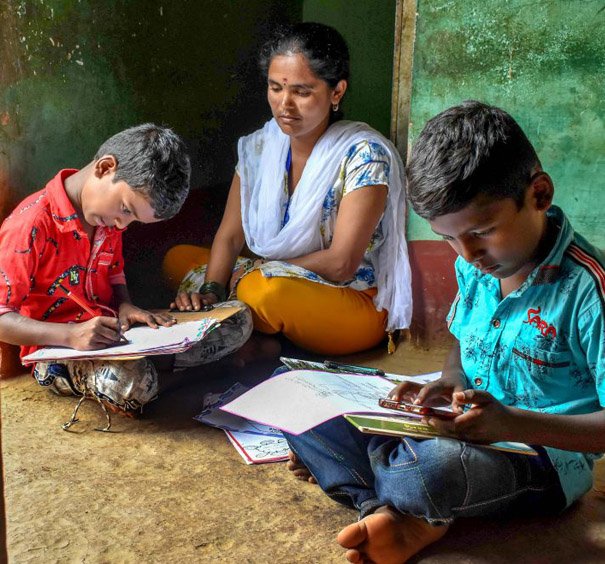
Our children are age 7-8 from class III and come from economically and socially deprived families where all adult members are working to make a living. These families have neither the resources nor the time to pay attention to their child’s education. Often times these children are left alone at home with their older child sibling. As a result many of these children are playing around in the streets instead of attending school. Therefore these children have not learned anything in 3-4 years at school.
Addressing the Challenges in Ensuring Regular Attendance
A significant challenge we face is irregular attendance among the children. This results in them falling behind in their learning, making it harder to meet our shared goal of equipping them for the next stage.
To address this challenge, we regularly hold parent-teacher meetings to identify and understand the reasons behind irregular attendance. We emphasize to parents the importance of consistent attendance for their child’s success.
Additionally, our teachers contact the parents if the child is absent for more than two days.
We also offer incentives to children who attend classes regularly.
To a large extent these measures have been helpful, but they have not entirely resolved the issue. But we seek additional strategies and support to encourage regular attendance because if left unaddressed, this problem will hinder the children’s ability to cope academically and socially in the long term.
Educational Materials: Lesson Plans and Study Guides
Our teachers are required to prepare detailed lesson plans two weeks in advance to ensure structured and effective learning. To reinforce the material covered, regular tests are conducted to assess the progress of students. The test results are meticulously recorded in our computer system, allowing for continuous monitoring of each child’s performance. Additionally, comprehensive monthly tests, modelled on term and final exams, are conducted independently to evaluate the children’s understanding. The school coordinator calculates and reviews the results, which are then shared with the respective teachers. This process enables teachers to critically analyse their class performance and identify areas that need greater emphasis. By adapting their teaching strategies accordingly, we aim to ensure that, by the end of the year, our children are well-prepared to excel in their exams and advance confidently to the next class.
Our Initiatives
To provide the best possible support for our children, we maintain a student-teacher ratio of 1:20, far better than the standard ratio of 1:50. This allows our children to receive personal attention, which is essential for their learning and development. Our teachers are not only highly dedicated but also empathetic and loving toward the children. Their nurturing approach makes school a welcoming and enjoyable environment, encouraging children to attend with enthusiasm and eagerness to learn.
Saturday activities
In addition to academics, we focus on the overall development of our children. Every Saturday, we organize extracurricular activities such as football, cricket, competitive running, badminton, musical chairs, painting, poetry recitation, singing, and more. These activities help build confidence, teamwork, and creativity, ensuring our children grow holistically